TechSpective Podcast
Rethinking Cybersecurity For A World Of AI And Machine Identities
June 10, 2026
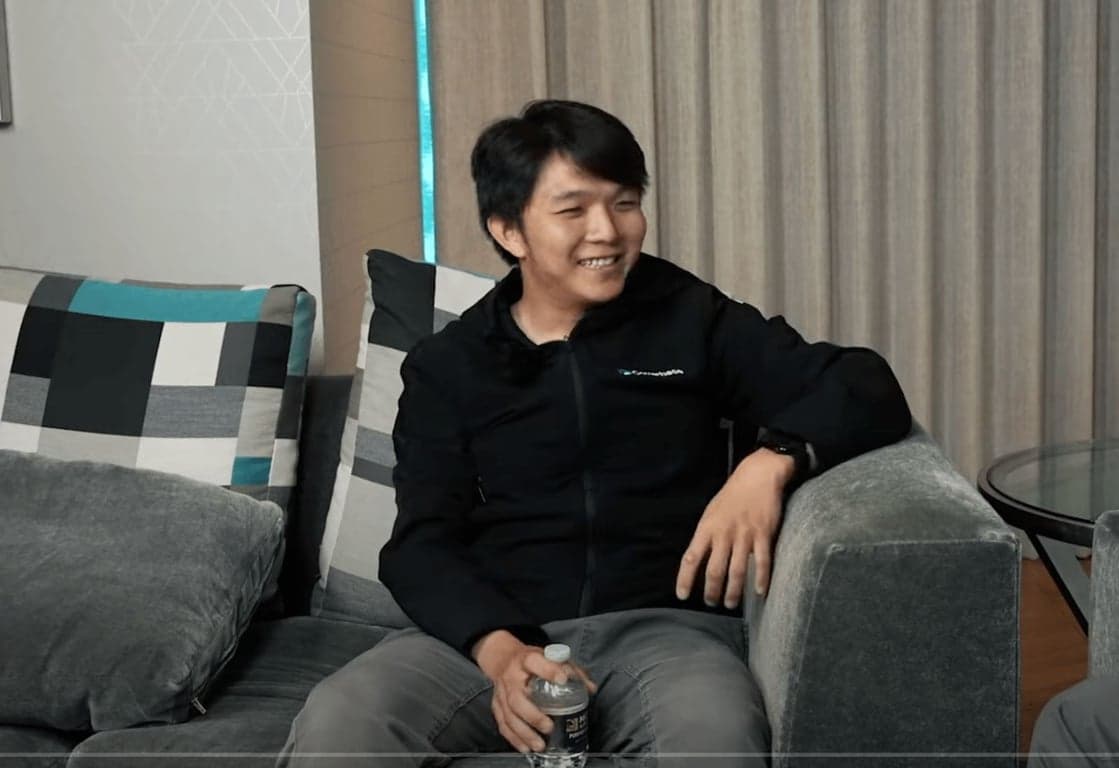
A conversation with Coverbase co-founder and CEO Clarence Chio on why modern security has moved beyond perimeters into behavior, context, machine identities, and AI-driven complexity.
Cybersecurity / AI / Identity / Cloud Complexity
Security model
Beyond the perimeter
New risk layer
Machine identities
Core requirement
Adaptive visibility
Cybersecurity / AI / Identity / Cloud Complexity
The old map no longer matches the environment
Security used to be easier to frame: networks, endpoints, users, and a perimeter. Protect the edge, monitor what sits inside it, and respond when something goes wrong.
That model has dissolved into environments that span multiple clouds, dozens or hundreds of SaaS applications, APIs, automated workflows, service accounts, machine identities, and AI agents. The problem space is not just more threats. It is more complexity.
The practical shift
Every actor inside the system, human or machine, now becomes part of the risk surface.
From walls to behavior
Clarence Chio and TechSpective traced the same underlying change: cybersecurity is less about building walls and more about understanding what is acting inside the system.
The modern environment changes constantly. Developers spin up services. New tools get deployed. AI models interact with data pipelines and APIs. Security teams need to know who is doing what, which systems are interacting, what normal looks like, and when behavior starts to drift.
Cloud and SaaS sprawl
Everywhere
APIs and workflows
AlwaysonAlways onAlways
on
Human identities
Only part ofitOnly part of itOnly part of
it
Machine actors
Exploding
That is one of the hardest problems in security right now because the environment is no longer stable enough for static assumptions. Visibility has to keep up with change, not describe last quarter’s architecture.
How the frame changed
Then
Networks, endpoints, users, and a perimeter defined the working model.
Now
Clouds, SaaS apps, APIs, service accounts, and automated workflows define the operating reality.
Next
AI agents and machine identities create more autonomous activity inside sensitive systems.
Risk
Every actor, workflow, and integration becomes a potential control point or failure point.
Response
Security programs need behavior, context, and adaptive governance.
AI does not magically solve weak security programs
AI is appearing on both sides of the security equation. Vendors are embedding it to analyze data faster and automate response. Attackers are experimenting with it to generate malware, improve phishing, and accelerate reconnaissance.
The issue is not whether AI is present. It is what AI is amplifying.
Automation inherits the quality of the system around it
If visibility is poor, AI does not fix that. If governance is weak, automation can make the problem worse. Technology rarely fixes systemic problems by itself.
Visibility
AI cannot reason from what the program cannot see
Security teams still need reliable telemetry across SaaS, cloud, APIs, identities, and workflows. The model is only useful when the operating context is observable.
Governance
Automation can scale weak decisions
When ownership, approval paths, and control boundaries are unclear, AI can accelerate the same drift the organization already struggles to manage.
Identity
Machine identities become first-class risk
Service accounts, integrations, AI agents, and automated jobs often act with durable access. They deserve the same behavioral scrutiny as human users, and sometimes more.
People
Judgment remains central
Security professionals need context, curiosity, and permission to challenge assumptions. Checklists alone cannot keep up with environments that change every day.
Clarence’s point
AI tends to amplify whatever processes already exist. Better tools help, but they do not replace visibility, governance, and critical thinking.
The answer is a security program designed to adapt
The attack surface keeps growing. Infrastructure is more distributed. AI and automation are adding new layers of capability and new layers of risk. There is no single tool that collapses all of that complexity into a solved problem.
What organizations can do is build better visibility, invest in people, and design security programs that expect the environment to change. The goal is not a perfect static map. It is a program that can keep asking better questions as systems, identities, and workflows evolve.
Operating principle
Modern security teams need the freedom to question assumptions, not just follow inherited checklists.
Practical moves for AI-era security
For teams trying to make sense of AI, machine identities, and modern infrastructure risk, the conversation points toward a few durable practices.
01
Map actors, not just assets
Track human users, service accounts, integrations, automation, and AI agents as participants in the environment.
02
Watch behavior over assumptions
Understand which systems interact, which workflows are normal, and which changes create risk.
03
Keep people in the loop
Give security professionals the context and authority to investigate anomalies and challenge brittle processes.
01
Map actors, not just assets
Track human users, service accounts, integrations, automation, and AI agents as participants in the environment.
02
Watch behavior over assumptions
Understand which systems interact, which workflows are normal, and which changes create risk.
03
Keep people in the loop
Give security professionals the context and authority to investigate anomalies and challenge brittle processes.
The direction is adaptive security
Organizations do not need another promise that AI will solve everything. They need visibility that survives change, governance that accounts for machine-scale activity, and teams that can reason through ambiguity.
Watch the full discussion
The full TechSpective Podcast episode with Clarence Chio goes deeper on cybersecurity complexity, AI’s role on both sides of the equation, and why judgment still matters in a world of automation.
TechSpective Podcast
A thoughtful conversation on AI, identity, behavior, and the future shape of cybersecurity programs.
Read the original TechSpective article: Rethinking Cybersecurity For A World Of AI And Machine Identities.